
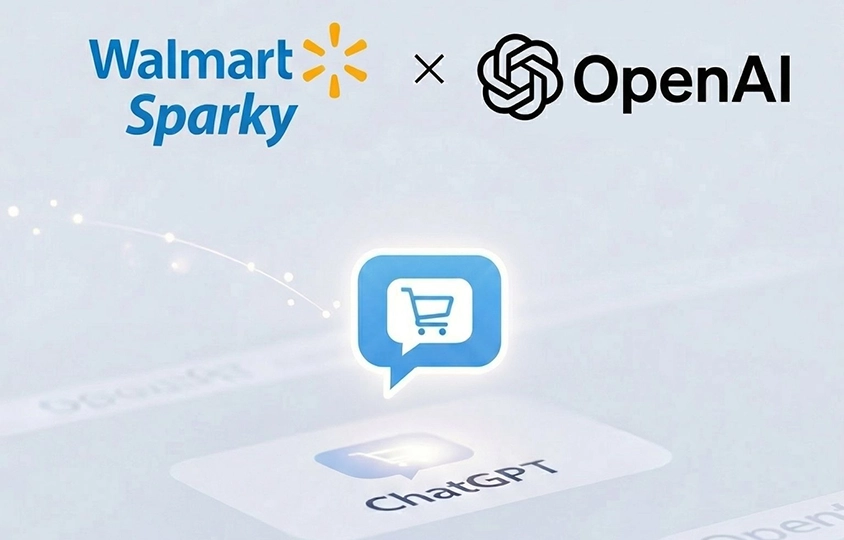
Walmart’s strategy of bringing their AI Chatbot Sparky to ChatGPT, shows how even the second largest retailer by digital sales sees the power of discovery being done by consumers on ChatGPT to learn everything they can before buying a product and narrowing things down to a brand and even a specific product SKU before buying.
These shopper journeys don’t start with a search term but start with typically a lifestyle question – the example Walmart stated was someone asking about starting on a GLP-1 and asking for advice on maintaining good health and ending up buying Vitamins from Walmart.
OpenAI’s direction to brands and retailers after backing out of Instant Checkout was that going forward they expect shopping to happen within ChatGPT apps. ChatGPT apps provide a very rich and immersive experience for consumers to ask questions about products using the rich data retailers already have about their products. Walmart has been investing heavily in Sparky for a while now and so bringing that to ChatGPT means Walmart can replicate the same site experience to ChatGPT users based on conversations started in ChatGPT without requiring them to go to Walmart.com. Target, Instacart, Booking.com, Hyatt Hotels, Spotify and many others have already deployed ChatGPT apps as of this morning there are over 240 apps on ChatGPT – not all of them are shopping apps but clearly apps are becoming a great way for brands and retailers to engage with ChatGPT consumers.
The reason these apps will work better than Instant Checkout for shoppers is because of trust. These branded apps make consumers comfortable that they are dealing with the retailer or brand they intend to purchase from.
I expect most retailers and brands will follow suit and deploy ChatGPT apps, this is an excellent opportunity for retailers and brands to be in the conversations consumers are having in ChatGPT that usually lead to a purchase.